There was a conversation happening on Twitter on Sunday, and the general consensus was about how do we convey that diabetes is serious and isn't a joke, with out sounding like you're winging about it or with out sounding like everyone should turn around and say "wow you're so inspiring" because to those of us with diabetes, it's ordinary life. There isn't a choice for us in whether or not we decide to have to look after our diabetes, we haven't got a choice but to give ourselves insulin, otherwise we would die, so we wake up every day and go through the same routine, get out of bed, check blood sugar, give insulin, eat breakfast and so on. It becomes a subconscious routine, and I'll never forget what the nurse at the hospital told me the day I was diagnosed, she said, "One day, your diabetes will be as routine as brushing your teeth."
Most of us diabetics don't think we're brave, or inspiring, to us, we're pretty ordinary. What I will say though is that diabetes is tough, it's not easy and I think that what people on the outside looking in find commendable about those with diabetes is probably the fact that we DO get on with it. I don't question it, I don't think I've ever questioned why me, why did I get diabetes? Maybe as a joke when I say I pulled the short straw in comparison to my sister, wear glasses, got diabetes, weigh more, not as pretty (ha). Now this is where things get a bit tricky, because we do complain about it and we have the right to, it's annoying and it's irritating and there is no doubt about it that it's serious and can make you very unwell, but the question amongst those of us conversing about this subject on Twitter basically was, "How do we convey to other people how serious diabetes is, without coming across as whining about it?" There is a fine line between "Look at me, I'm so inspirational because diabetes is serious" and "I don't want to be labelled an inspiration, diabetes isn't that bad" and it just gets tricky, and I feel like a lot of people will downplay it just to avoid any unnecessary attention and I reckon that is where a lot of people can get the wrong end of the stick.
I wouldn't downplay diabetes, I would probably be the first person to jump on my high horse about it if someone made even the slightest suggestion about diabetes not being serious. Then it made us wonder, "well, where do the misconceptions come from?" I think that Type 1 Diabetics totally do themselves a disservice by contributing to the stigma against Type 2 Diabetics. The media is the biggest problem in terms of diabetes awareness, almost always reporting the wrong stuff. The Type 1 Diabetics out there who say "You caused your Type 2 from a bad diet" are not helping their own cause. In fact, Type 1 and Type 2 are no more deserving of sympathy than one another, because Type 2 diabetics may well be experiencing hardship that Type 1 diabetics don't understand, for example, those Type 2 diabetics who aren't on insulin have to be super careful with what they eat to avoid that spike, they can't take insulin to correct whatever high blood sugar may occur as a result of just eating. As long as the media is there to report the wrong things, and as long as Wilford Brimley is out there talking about his "diabeetus" us Type 1's don't really have much hope! I sometimes think we need to start with debunking Type 2 myths. All the jokes, and the idea that diabetes isn't serious and funny, all stem from Type 2 diabetes myths, and us as Type 1's are lumped together with Type 2 under the umbrella term "diabetes" and most people don't really truly understand either type!
I feel like I've gone on a little bit of a tangent here. I also feel like I've totally lost my original point, so I'm not even going to try and summarise it for you here. Hopefully you get my vibe!
Ellie

Monday, 21 March 2016
Thursday, 10 March 2016
Diabulimia
I bet you've probably never heard of Diabulimia, you probably don't even know what it is. Let me give you the Google definition that comes up when you enter the term into the search bar: "Diabulimia (a portmanteau of diabetes and bulimia) refers to an eating disorder in which people with Type 1 Diabetes deliberately give themselves less insulin than they need, for the purpose of weight loss. Diabulimia is not currently recognised as a formal diagnosis by the medical or psychiatric communities" It has a Wikipedia page though, and it affects 40% of people with Type 1 Diabetes, and people have died and are dying from it.
I was privileged enough to attend the Diabetes UK Professional Conference last week, and one of the sessions was on "Practical approaches to managing disordered eating and eating disorders" facilitated by Jacqueline Allan, who is currently doing a PHD on the subject at Birkbeck, University of London, Jane Morris and Jenny Singer. Such an important topic, something that really needs to be talked about. One of the first questions posed to the audience was if any of them knew what Diabulimia is, a good amount of HCP's in the room put up their hands, nodding their heads, yeah they had an idea...and that response sparked half "Well done for knowing what it is!" and half "Well where are the HCP's who DON'T know what it is and need to learn about it?" The room had a significant number of people in it though, which is good, any number of people listening and learning is good. However, Jacqueline's frustration, as a person who has been through it herself, was clear. And rightly so!
A conversation that some of us were having amongst ourselves before the session started was, do diabetics in general eat "normally"? And the general consensus was not really. Scanning the backs of packets for nutritional information, weighing our food etc. isn't "normal" and from the moment of being diagnosed we're taught to essentially have almost an "obsession" over everything we put into our bodies. Every time we eat there are questions flurrying around our minds "How many carbs are in this?" "Should I be eating this?" "Where is the packet I need to see it"...we do not eat like everyone else, we have it built into us that we need to see the nutritional information on everything we eat, and for some this goes right over their heads, but for others this is detrimental in a way that may not be so clear straight away. Jane Morris also touched on this, and as a Psychiatrist who has published in the field of eating disorders she said she would never dream of having a recovering anorexic look at the nutritional information on the food they're eating but for diabetics this is unavoidable.
As I said in the beginning of this blog post, Diabulimia affects a staggering 40% of those with Type 1 Diabetes- "Disordered eating behaviours are more prevalent in adolescents with Type 1 Diabetes" As well as being surrounded with the nutritional information in our food, we are also surrounded with constant measurements...notably our weight. Every clinic appointment starts off with "Hop on the scales" What if I don't want to step on the scales?!...Do it anyway, all in the name of medicine! Our weight is scribbled down on a piece of paper every single appointment, for the consultant to see, but even worse, for you to see. However, our weight is a significant point that consultants should be paying attention to, and if they knew more about Diabulimia they may be able to spot warning signs in a person's weight at clinic; "The most frequently cited reasons for deliberate insulin omission is weight loss" and if a consultant isn't tuned into this then it becomes easy to hide. There is an array of excuses one could come up with other than wanting to lose weight. If HCP's noticed a rise in HbA1c and a decline in weight, and knew what Diabulimia is, then bingo! However, HCP's do not know enough.
It's a very well known fact that no insulin, leads to ketones and in turn becomes Diabetic ketoacidosis. From Kris' blog, (https://medium.com/@k_d85/thinking-about-dka-887e73aa9c10#.q8at8dhjk) I found data values surrounding admissions to hospital with Diabetic ketoacidosis, about 44% are due to infection, then there is pump malfunction, alcohol etc. and then there are those who's diagnosis of Type 1 comes from presenting to hospital in DKA.
19% of cases are considered due to "Non-compliance" if you are a HCP and you use the words "Non-compliance" to describe a person with Type 1 Diabetes then what are you even doing? Just stop. One of my tweets that generated 33 likes and 20 retweets was this: "HCP's need to stop using the word non-compliant, because uncontrolled diabetes is almost always a deeper set problem" And it links in to the session that addressed managing admissions with Diabetic ketoacidosis and recognising that repeated admissions with Diabetic ketoacidosis are not "Non-compliance" but are in fact a psychological problem that needs to be addressed and there is a very high chance that Diabulimia falls into this.
The mortality rate for diabetes as a disease in itself is 2.2/1000, the mortality rate for people with both Type 1 Diabetes and an Eating Disorder is 34.6/1000. Look at those figures for comparison, but also look at them and realise just how much of a problem it is. People die from Diabulimia, it's not something to be brushed off, and it leads us to question over and over again WHY is this not recognised...we can figure out the facts and figures and chuck out data values left right and centre that leave people shocked, yet it is still not officially recognised by the medical and psychiatric communities? Of course, it's probably a bit of a taboo subject, who wants to hear about a Type 1 Diabetic purposely not taking insulin? When we are taught that insulin is our lifeline? What preposterous behaviour, who wants to hear that? It makes people feel uncomfortable, that someone would do "the unthinkable" and stop taking insulin. Well guess what? It happens.And there are so many people out there in such a dark place, who feel so uncomfortable in their own skin that they would risk their lives to be thinner.
It is a tragic situation that 40% of people with Type 1 Diabetes find themselves in.
Talk about it. We NEED to talk about Diabulimia. Health Care Professionals need to know what it is, and if they do know what it is then provide them the tools and the education to be able to approach the subject. A consultant is the first line for a Type 1 Diabetic and the problems they might encounter, and they need to be clued up on every aspect of a life with Type 1 Diabetes, and even some of those struggling with Diabulimia do not know the name of it themselves, and probably will never bring it up themselves at an appointment either. Diabulimia ins't rare, Diabulimia isn't a "small percentage" it's 40%, that's nearly half of all people living with Type 1 Diabetes. Now tell me that Diabulimia is something that can be ignored.
-Ellie
I was privileged enough to attend the Diabetes UK Professional Conference last week, and one of the sessions was on "Practical approaches to managing disordered eating and eating disorders" facilitated by Jacqueline Allan, who is currently doing a PHD on the subject at Birkbeck, University of London, Jane Morris and Jenny Singer. Such an important topic, something that really needs to be talked about. One of the first questions posed to the audience was if any of them knew what Diabulimia is, a good amount of HCP's in the room put up their hands, nodding their heads, yeah they had an idea...and that response sparked half "Well done for knowing what it is!" and half "Well where are the HCP's who DON'T know what it is and need to learn about it?" The room had a significant number of people in it though, which is good, any number of people listening and learning is good. However, Jacqueline's frustration, as a person who has been through it herself, was clear. And rightly so!
A conversation that some of us were having amongst ourselves before the session started was, do diabetics in general eat "normally"? And the general consensus was not really. Scanning the backs of packets for nutritional information, weighing our food etc. isn't "normal" and from the moment of being diagnosed we're taught to essentially have almost an "obsession" over everything we put into our bodies. Every time we eat there are questions flurrying around our minds "How many carbs are in this?" "Should I be eating this?" "Where is the packet I need to see it"...we do not eat like everyone else, we have it built into us that we need to see the nutritional information on everything we eat, and for some this goes right over their heads, but for others this is detrimental in a way that may not be so clear straight away. Jane Morris also touched on this, and as a Psychiatrist who has published in the field of eating disorders she said she would never dream of having a recovering anorexic look at the nutritional information on the food they're eating but for diabetics this is unavoidable.
As I said in the beginning of this blog post, Diabulimia affects a staggering 40% of those with Type 1 Diabetes- "Disordered eating behaviours are more prevalent in adolescents with Type 1 Diabetes" As well as being surrounded with the nutritional information in our food, we are also surrounded with constant measurements...notably our weight. Every clinic appointment starts off with "Hop on the scales" What if I don't want to step on the scales?!...Do it anyway, all in the name of medicine! Our weight is scribbled down on a piece of paper every single appointment, for the consultant to see, but even worse, for you to see. However, our weight is a significant point that consultants should be paying attention to, and if they knew more about Diabulimia they may be able to spot warning signs in a person's weight at clinic; "The most frequently cited reasons for deliberate insulin omission is weight loss" and if a consultant isn't tuned into this then it becomes easy to hide. There is an array of excuses one could come up with other than wanting to lose weight. If HCP's noticed a rise in HbA1c and a decline in weight, and knew what Diabulimia is, then bingo! However, HCP's do not know enough.
It's a very well known fact that no insulin, leads to ketones and in turn becomes Diabetic ketoacidosis. From Kris' blog, (https://medium.com/@k_d85/thinking-about-dka-887e73aa9c10#.q8at8dhjk) I found data values surrounding admissions to hospital with Diabetic ketoacidosis, about 44% are due to infection, then there is pump malfunction, alcohol etc. and then there are those who's diagnosis of Type 1 comes from presenting to hospital in DKA.
19% of cases are considered due to "Non-compliance" if you are a HCP and you use the words "Non-compliance" to describe a person with Type 1 Diabetes then what are you even doing? Just stop. One of my tweets that generated 33 likes and 20 retweets was this: "HCP's need to stop using the word non-compliant, because uncontrolled diabetes is almost always a deeper set problem" And it links in to the session that addressed managing admissions with Diabetic ketoacidosis and recognising that repeated admissions with Diabetic ketoacidosis are not "Non-compliance" but are in fact a psychological problem that needs to be addressed and there is a very high chance that Diabulimia falls into this.
The mortality rate for diabetes as a disease in itself is 2.2/1000, the mortality rate for people with both Type 1 Diabetes and an Eating Disorder is 34.6/1000. Look at those figures for comparison, but also look at them and realise just how much of a problem it is. People die from Diabulimia, it's not something to be brushed off, and it leads us to question over and over again WHY is this not recognised...we can figure out the facts and figures and chuck out data values left right and centre that leave people shocked, yet it is still not officially recognised by the medical and psychiatric communities? Of course, it's probably a bit of a taboo subject, who wants to hear about a Type 1 Diabetic purposely not taking insulin? When we are taught that insulin is our lifeline? What preposterous behaviour, who wants to hear that? It makes people feel uncomfortable, that someone would do "the unthinkable" and stop taking insulin. Well guess what? It happens.And there are so many people out there in such a dark place, who feel so uncomfortable in their own skin that they would risk their lives to be thinner.
It is a tragic situation that 40% of people with Type 1 Diabetes find themselves in.
Talk about it. We NEED to talk about Diabulimia. Health Care Professionals need to know what it is, and if they do know what it is then provide them the tools and the education to be able to approach the subject. A consultant is the first line for a Type 1 Diabetic and the problems they might encounter, and they need to be clued up on every aspect of a life with Type 1 Diabetes, and even some of those struggling with Diabulimia do not know the name of it themselves, and probably will never bring it up themselves at an appointment either. Diabulimia ins't rare, Diabulimia isn't a "small percentage" it's 40%, that's nearly half of all people living with Type 1 Diabetes. Now tell me that Diabulimia is something that can be ignored.
-Ellie
Saturday, 5 March 2016
Diabetes UK Professional Conference 2016- Blog 1
I am not huge on numbers and data and statistics and all that side of things, I'm not an expert on totally understanding it but I get the idea, but mainly when I applied to come along to #DPC16 I wanted to be able to not just interpret some data from a study and put it in a blog post and share it out to people who might not even get what I'm talking about, but also to be here to give people a bigger picture, to be able to sit in on the sessions and turn it into something that I think the general diabetes community would be interested in and can relate to, if I got anywhere with my application...and I actually ended up in Glasgow. Although attendance was questionable considering the disgusting turbulence on the way here...
First impressions were along the lines of "I feel so out of place" and I did, I very much did but it would be a surprise if everyone didn't at least have a moment of, this place is absolutely huge and so professional and how am I going to navigate this!? That take on things is also me as a person and it's a part of my personality in that I go through that thought process about certain things.
The conference has around 3,000 people attending it this year, a massive number, and the SECC in Glasgow provides you with plenty of opportunies to get lost may I just add! However it is undoubtedly very well organised and there is a vast amount of information and exhibition stands and posters that you can look at all over the place. As they say the early bird gets the worm and with the thought of a possible 3,000 people attempting to register and get their badges thus inducing a very large crew, us bloggers decided we would do our best to get their earlier and get our badges, having been given our badges it was time to really get into the nitty gritty and get into the conference. There are various sessions running through out the day in various time blocks split up by coffee breaks and of course, lunch time.
Everyone was shown to the Clyde Auditorium for around 8:45am first of all to hear the opening speeches, kicked off of course by Chris Askew, chief executive of Diabetes UK, who highlighted the current challenges we face in Diabetes care and of course I have been and continue to live tweet throughout the sessions along with the four other bloggers, what I picked up on and one of the things that stood out for me was that specific groups tend to experience worse care, especially those who are under 40 years old, which of course is something that speaks to me as a young person with Type 1 and it's interesting to see that young people genuinely aren't receiving adequate care in certain areas.
The opening words from Chris were followed by a session on "New outcome trials in Type 1 Diabetes" which lasted until 9:55. So how each session works is that there is a overall title, and it is split into three separate talks each allocated a time slot one after the other.
8:55: The Relative Effectiveness of Pumps over MDI and Structured Education (REPOSE) trial, presented by Simon Heller, Sheffield
The talk basically posed the question of "Are pumps better than MDI?" A fairly bold topic I think but an excellent topic to address and it made for a very interesting talk. In summary, the suggestion was made that all in all, neither is better than the other...if people are given the correct education and are adequately advised on how they can utilise their insulin effectively then the answer is the effectiveness of pumps over MDI is relatively not something that is completely clear and as Simon said (that is not a pun, can I just say!) "the benefit of pump technology alone remains unclear...most of the benefit in pumps comes from training in insulin use". So of course that leaves the question, is it all down to education? I won't get into it as I am merely reporting on what I have heard, but I'll leave you to ponder on that anyway, it's really interesting as a type 1 diabetic to see studies like REPOSE going on that are looking at things like this. The overall general consensus was, and can be summed up in this sentence from Simon- "we have to provide much more sustained support for self management" so there's that talk!
9:25: Peptide Immunotherapy for Type 1 Diabetes, presented by Colin Dayan from Cardiff
This was a talk that proves the CS (Clinical Science) side of things at #DPC16 and so of course I'm not going to pretend that I am a scientist. What I will say is that of course, like all of the other sessions it was very interesting and it was looking at the levels of C-peptide in people after a Type 1 Diagnosis, and studied the correlation between levels of C-Peptide and HbA1c and as the levels got lower, the percentage of people who's HbA1c was above 7.5% got higher, and I suppose now is a good time to give the definition of C-peptide "C-Peptide is a substance produced by the beta cells in the pancreas when pro insulin splits apart and forms one molecule of C-peptide and one molecule of insulin" in less technical words, and in short, the higher your level of C-peptide, the more insulin your body is naturally producing on its own, and so the study was looking at is the role that it plays in Type 1 Diabetes and I will stop here because I again, can't pretend as though I'm totally clued up on it!
9:55: Exercise for beta cell preservation in Type 1 Diabetes: The Exercise for Type One Diabetes (EXTOD) trial, presented by Rob Andrews from Exeter and Parth Narendran from Birmingham
The question being posed in this talk was "does exercise preserve beta cell function?" It is very well known that Type 1 Diabetes is characterised by the loss of insulin-producing beta cell function, in turn resulting in no production of insulin from the body. Some of the main points were on how the rate of beta cell loss is slightly less aggressive in adults than it is in children so it's important to look at this, however it proved difficult getting people to stay in the study and also that a fear of hypoglycaemia is a significant barrier with exercise and what was also touched on was how are those barriers overcome these barriers over come to get people to exercise more. And a big part of the
EXTOD study was about empowering people to exercise more and it was also mentioned that people
are told by their HCP's to exercise more but from a survey it's not looking as though some know exactly what they're talking about when it comes to exercise but also can't give the adequate advice.
So there is what I gathered from those three initial sessions and I thought I would break them down and talk about them individually for the beginning of this blog post just to give people an idea of how the sessions play out and the kinds of talks that go on. Immediately just from experiencing those three talks there is an instant sense of amazement and awe when you realise you're in the presence of so much knowledge and so many HCP's who are there and willing to learn from one another and willing to find ways to improve the care that they provide. Very interesting to be able to be a part of that.
Later on in the day I attended different sessions such as "Diabetes in Glasgow" which was probably the most interesting session of the day for me personally as we looked at Diabetes in Glasgow and how they are trying to make it a 'diabetes friendly city' and there was talk about how some are "stuck in a 1949 model of healthcare where people come, they have a lecture, they leave, we forget about them" and that's an issue that's affecting not just Glasgow but other areas too and a consultant paediatrician from the Netherlands presented 'Diabeter' which is a service in Amsterdam for young people that is not in a hospital and so not confined to hospital rules and guidelines and what stood out to me is he said that hospitals don't allow round tables, they have to be square apparently so 'Diabeter'? They have round tables. Their belief is that it is "about looking at how diabetes fits in to your life" and it is not "always about numbers, it is about you" which I think is excellent and links in to a lot of questions about why more effort isn't made to try and get these kinds of services replicated elsewhere.
What I want to touch on last but not least is a topic that needs to be talked about more, which is mental health. And while the topic of mental health is not widely discussed it seems there was two talks yesterday which touched on the subject, there was a session on "multidisciplinary approaches to managing admissions for DKA" I didn't attend that session but instead went to the other session about mental health which was a workshop on "practical approaches to managing disordered eating and eating disorders" However although I didn't attend the first session I did learn something from it from the other bloggers at the conference and learnt that it is basically saying people who are constantly in DKA need more psychological support because a lot of the time that is where the issue lies and that is the reason for the admissions. That links in though quite well with the Eating disorders session because one of the main things I took away from that and what generated a lot of retweets was the idea that HCP's need to stop using he word "non-compliant" because a high hbA1c is not always a straight forward answer but can be something far more serious like 'diabulimia' which affects 40% of those who have Type 1 Diabetes and involves not taking any insulin in order to lose weight. And it is something that should be talked about more because it affects a lot of young people with Type 1.
All in all, DPC day one was very full on and full of lots of very interesting information that I feel honoured to be able to hear first hand and it's amazing to see so many HCP's come together with the collective desire to improve diabetes care and as a person with type 1 myself it's wonderful to see that. So here I am having had a good think about the sessions and my brain was finally feeling full of sentences for the blog and different ideas that it decided that it wanted to regurgitate all of it onto this one first blog post, which has turned out to be very long but it's hard to give short highlights of such a massive event.
Anyway, if you read this and got to the end, well done, good job for sticking around I hope I didn't bore you!
-Ellie
First impressions were along the lines of "I feel so out of place" and I did, I very much did but it would be a surprise if everyone didn't at least have a moment of, this place is absolutely huge and so professional and how am I going to navigate this!? That take on things is also me as a person and it's a part of my personality in that I go through that thought process about certain things.
The conference has around 3,000 people attending it this year, a massive number, and the SECC in Glasgow provides you with plenty of opportunies to get lost may I just add! However it is undoubtedly very well organised and there is a vast amount of information and exhibition stands and posters that you can look at all over the place. As they say the early bird gets the worm and with the thought of a possible 3,000 people attempting to register and get their badges thus inducing a very large crew, us bloggers decided we would do our best to get their earlier and get our badges, having been given our badges it was time to really get into the nitty gritty and get into the conference. There are various sessions running through out the day in various time blocks split up by coffee breaks and of course, lunch time.
Everyone was shown to the Clyde Auditorium for around 8:45am first of all to hear the opening speeches, kicked off of course by Chris Askew, chief executive of Diabetes UK, who highlighted the current challenges we face in Diabetes care and of course I have been and continue to live tweet throughout the sessions along with the four other bloggers, what I picked up on and one of the things that stood out for me was that specific groups tend to experience worse care, especially those who are under 40 years old, which of course is something that speaks to me as a young person with Type 1 and it's interesting to see that young people genuinely aren't receiving adequate care in certain areas.
The opening words from Chris were followed by a session on "New outcome trials in Type 1 Diabetes" which lasted until 9:55. So how each session works is that there is a overall title, and it is split into three separate talks each allocated a time slot one after the other.
8:55: The Relative Effectiveness of Pumps over MDI and Structured Education (REPOSE) trial, presented by Simon Heller, Sheffield
The talk basically posed the question of "Are pumps better than MDI?" A fairly bold topic I think but an excellent topic to address and it made for a very interesting talk. In summary, the suggestion was made that all in all, neither is better than the other...if people are given the correct education and are adequately advised on how they can utilise their insulin effectively then the answer is the effectiveness of pumps over MDI is relatively not something that is completely clear and as Simon said (that is not a pun, can I just say!) "the benefit of pump technology alone remains unclear...most of the benefit in pumps comes from training in insulin use". So of course that leaves the question, is it all down to education? I won't get into it as I am merely reporting on what I have heard, but I'll leave you to ponder on that anyway, it's really interesting as a type 1 diabetic to see studies like REPOSE going on that are looking at things like this. The overall general consensus was, and can be summed up in this sentence from Simon- "we have to provide much more sustained support for self management" so there's that talk!
9:25: Peptide Immunotherapy for Type 1 Diabetes, presented by Colin Dayan from Cardiff
This was a talk that proves the CS (Clinical Science) side of things at #DPC16 and so of course I'm not going to pretend that I am a scientist. What I will say is that of course, like all of the other sessions it was very interesting and it was looking at the levels of C-peptide in people after a Type 1 Diagnosis, and studied the correlation between levels of C-Peptide and HbA1c and as the levels got lower, the percentage of people who's HbA1c was above 7.5% got higher, and I suppose now is a good time to give the definition of C-peptide "C-Peptide is a substance produced by the beta cells in the pancreas when pro insulin splits apart and forms one molecule of C-peptide and one molecule of insulin" in less technical words, and in short, the higher your level of C-peptide, the more insulin your body is naturally producing on its own, and so the study was looking at is the role that it plays in Type 1 Diabetes and I will stop here because I again, can't pretend as though I'm totally clued up on it!
9:55: Exercise for beta cell preservation in Type 1 Diabetes: The Exercise for Type One Diabetes (EXTOD) trial, presented by Rob Andrews from Exeter and Parth Narendran from Birmingham
The question being posed in this talk was "does exercise preserve beta cell function?" It is very well known that Type 1 Diabetes is characterised by the loss of insulin-producing beta cell function, in turn resulting in no production of insulin from the body. Some of the main points were on how the rate of beta cell loss is slightly less aggressive in adults than it is in children so it's important to look at this, however it proved difficult getting people to stay in the study and also that a fear of hypoglycaemia is a significant barrier with exercise and what was also touched on was how are those barriers overcome these barriers over come to get people to exercise more. And a big part of the
EXTOD study was about empowering people to exercise more and it was also mentioned that people
are told by their HCP's to exercise more but from a survey it's not looking as though some know exactly what they're talking about when it comes to exercise but also can't give the adequate advice.
So there is what I gathered from those three initial sessions and I thought I would break them down and talk about them individually for the beginning of this blog post just to give people an idea of how the sessions play out and the kinds of talks that go on. Immediately just from experiencing those three talks there is an instant sense of amazement and awe when you realise you're in the presence of so much knowledge and so many HCP's who are there and willing to learn from one another and willing to find ways to improve the care that they provide. Very interesting to be able to be a part of that.
Later on in the day I attended different sessions such as "Diabetes in Glasgow" which was probably the most interesting session of the day for me personally as we looked at Diabetes in Glasgow and how they are trying to make it a 'diabetes friendly city' and there was talk about how some are "stuck in a 1949 model of healthcare where people come, they have a lecture, they leave, we forget about them" and that's an issue that's affecting not just Glasgow but other areas too and a consultant paediatrician from the Netherlands presented 'Diabeter' which is a service in Amsterdam for young people that is not in a hospital and so not confined to hospital rules and guidelines and what stood out to me is he said that hospitals don't allow round tables, they have to be square apparently so 'Diabeter'? They have round tables. Their belief is that it is "about looking at how diabetes fits in to your life" and it is not "always about numbers, it is about you" which I think is excellent and links in to a lot of questions about why more effort isn't made to try and get these kinds of services replicated elsewhere.
What I want to touch on last but not least is a topic that needs to be talked about more, which is mental health. And while the topic of mental health is not widely discussed it seems there was two talks yesterday which touched on the subject, there was a session on "multidisciplinary approaches to managing admissions for DKA" I didn't attend that session but instead went to the other session about mental health which was a workshop on "practical approaches to managing disordered eating and eating disorders" However although I didn't attend the first session I did learn something from it from the other bloggers at the conference and learnt that it is basically saying people who are constantly in DKA need more psychological support because a lot of the time that is where the issue lies and that is the reason for the admissions. That links in though quite well with the Eating disorders session because one of the main things I took away from that and what generated a lot of retweets was the idea that HCP's need to stop using he word "non-compliant" because a high hbA1c is not always a straight forward answer but can be something far more serious like 'diabulimia' which affects 40% of those who have Type 1 Diabetes and involves not taking any insulin in order to lose weight. And it is something that should be talked about more because it affects a lot of young people with Type 1.
All in all, DPC day one was very full on and full of lots of very interesting information that I feel honoured to be able to hear first hand and it's amazing to see so many HCP's come together with the collective desire to improve diabetes care and as a person with type 1 myself it's wonderful to see that. So here I am having had a good think about the sessions and my brain was finally feeling full of sentences for the blog and different ideas that it decided that it wanted to regurgitate all of it onto this one first blog post, which has turned out to be very long but it's hard to give short highlights of such a massive event.
Anyway, if you read this and got to the end, well done, good job for sticking around I hope I didn't bore you!
-Ellie
Monday, 29 February 2016
PWDC16
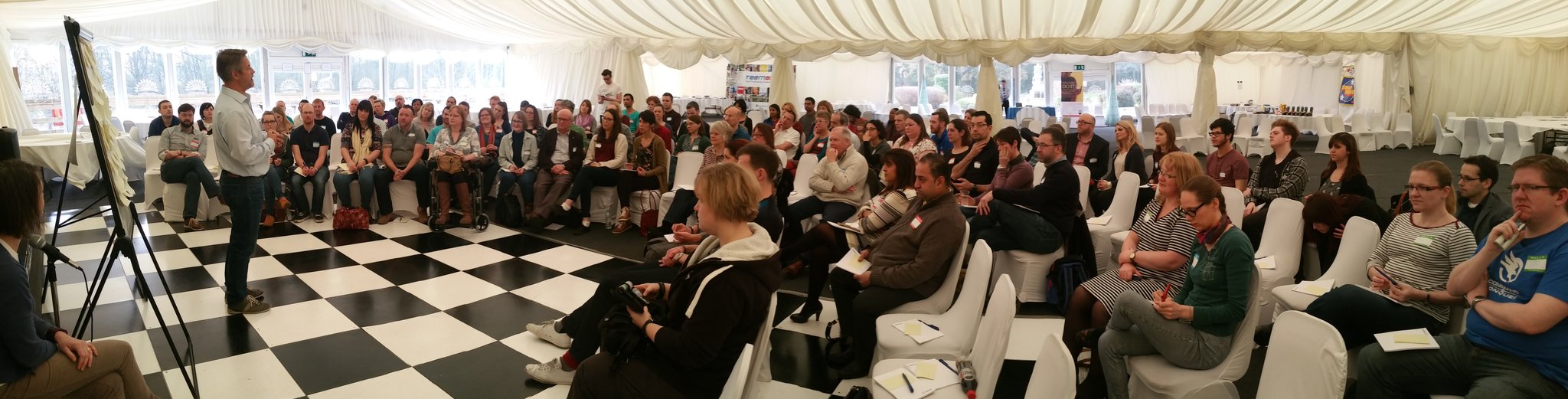
On Saturday 27th February my mum and I got up at 5:30am, and got to St. Pancras for 7:30am to catch the train to Nottingham. From that point, 2 hours was the only thing that separated me from a lot of people that I've "known" and been speaking on Twitter to for a very long time. As the train pulled into Nottingham I reckon I had more than just butterflies in my stomach, a whole jungle was running around in there I think! I've been a part of #gbdoc otherwise known as the Great Britain Diabetes Online Community since 2012, I remember Paul asking me to write a blog post for the website when it hadn't long been started up. I reckon if it wasn't for the #gbdoc I wouldn't have started up my blog, and definitely if it wasn't for the #gbdoc I wouldn't know some of the wonderful people that I know now. So, Paul, and Rhodri, and Alex and everyone else who keeps it going, thank you!
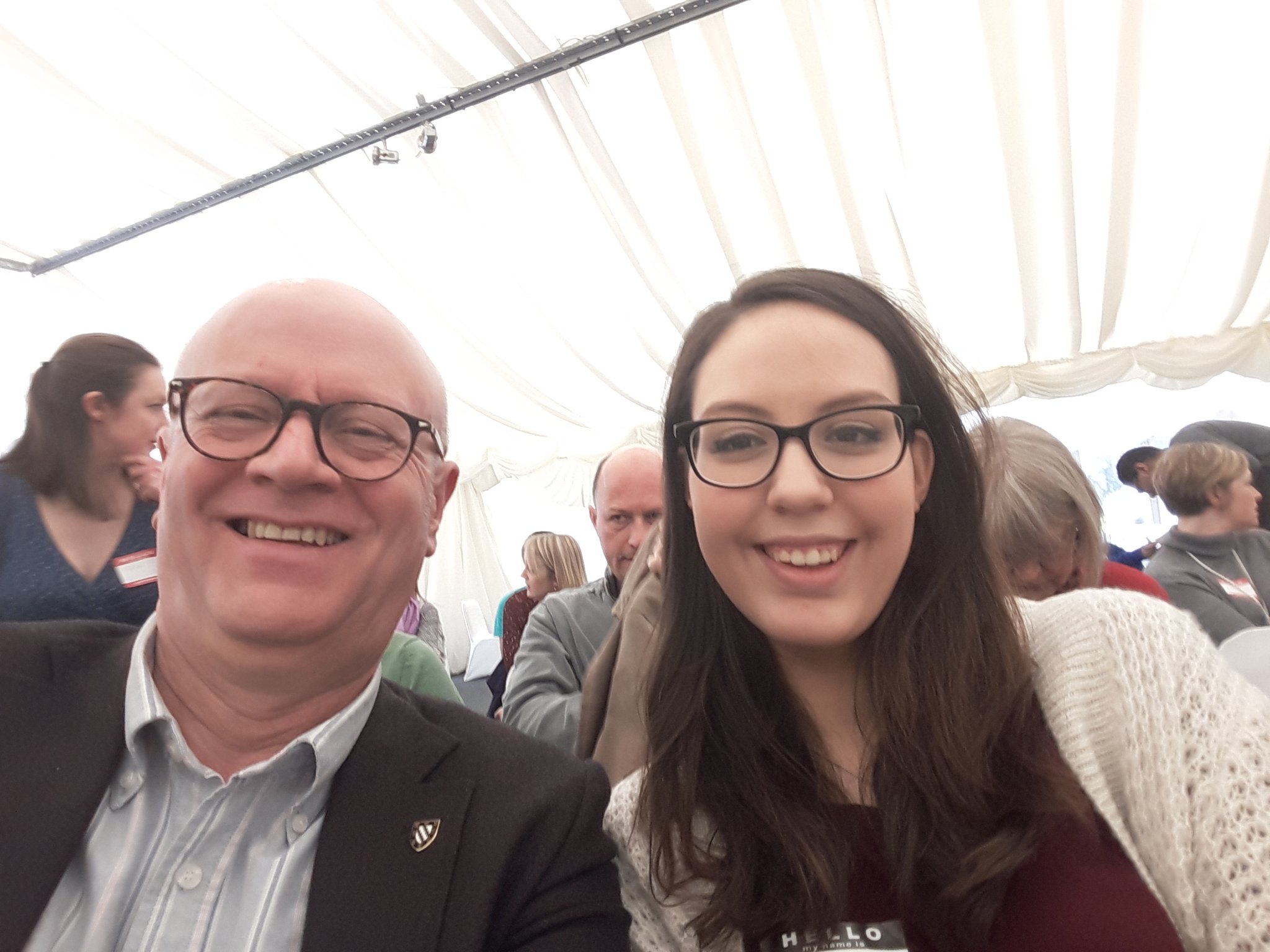
I couldn't stop grinning as my mum and I walked up the path to the marquee (which for the record, is a very impressive marquee!) we were greeted by Alex who showed us to the entrance and the first person I saw was Adrian and his wife, Sue! (AdrianLong3 on Twitter) For the first time we actually spoke real words to each other, we weren't speaking through Twitter we were face to face, in the same room and the only words we could use to describe it were "This is so weird!!" Not only do we get on well with diabetes in common, but we can also have conversations about other things, mainly cats! And of course, we couldn't resist a selfie;
More people started arriving, and for the first time I met many others who I've been talking to on Twitter, notably Abby (the_only_abi) and her husband, Nichola (Mrs_Nichola_D) and her husband, Jules (Jules1315) and her husband, and Jules was very shocked at my height, which I imagined people would be, I'm 5ft10, I did send out a prior warning on Twitter;)! It was brilliant being able to meet everyone in real life and lovely introducing everyone to my mum and introducing my mum to everyone, and it was awesome to be in a room full of diabetics where we were all "normal". Meeting Paul for the first time was a significant moment, he was also shocked at my height (I'm seeing a pattern here, haha) I've "known" Paul since I was 14/15 so to be able to finally meet him now at 18 in real life was amazing!
And Lydia (LydiaSara19)! Lydia and I met for the first time at Type 1 Parliament with JDRF in March 2014, and finally two years later we were able to see each other again which was wonderful. We talk all the time on social media and obviously get on just as well in real life, if not better! Again, it was weird but brilliant to be able to talk properly and face to face, not behind a computer or a phone screen. Lydia brought along Alyssa, who I've spoken to before through Type One Teens on Facebook and Grant, it was nice to meet them too and Alyssa came down from Scotland!

The agenda for the day was basically to first of all think about topics that we all want to discuss in sessions and then go off and join whatever sessions we wanted to! The sessions before lunch were things like mental health, diet and exercise, technology etc. I went and sat in on the mental health session, while my mum went to join on the discussion about diet and exercise because she's a personal trainer, and actually trains a lady that has Type 1! As Paul described it the day was like "a big coffee break" we weren't confined to a certain session once we sat down, we could rotate around the room and sit in on different sessions if we wanted to. All the sessions were very informal and it was a wonderful learning opportunity, everyone had the chance to speak if they wanted and sharing personal experiences about each session was definitely the best way to learn.

One of the things I was most excited about was a real life game of #bgbingo! Every Wednesday at 9pm members of the #gbdoc come together on Twitter and join in a tweet chat- and at the end of each chat there is a game of #bgbingo and this is basically where a random number is tweeted and we all have to test our blood sugar and whoever's blood sugar is closest to the number is the winner. I actually said to myself in the morning that I had to really try to keep my blood sugar in range because I don't mind the 'naughty step' on Twitter, but I'm not too keen on assuming naughty steps status in a room full of everyone! Ha ha. Despite not wanting to be on the 'naughty step' I was! However my blood sugar was 9 so not too shabby. We all wrote our blood sugar reading on a post-it note and stuck them on the window.

Lunch time brought lots of beeping into the room...pumps, meters and injection pens were in full swing. The venue missed out on the request for low carbohydrate food so lunch consisted of lots of sandwiches, but it was lovely nevertheless and my blood sugars were 6.1 afterwards, even if I did have a bit of cheesecake for dessert! After lunch we had another set of sessions, there was more tech talk, more talk about diet and there was also a session on diabetes and other conditions, and 'mank and moan' which was a chance for all the non-diabetics to get together and have a chat! Ha ha. I originally went to the diet session, however I don't really follow a diet, so eventually I went over to chat to Philippa (Flippper1) and Abby who were talking about blood tests! I also had a nice chat with Katie (Kat_greenfield) about pumps and the DAFNE course.
There was a representative from Abbott at the conference who was there to talk to everyone who wanted to know about the Freestyle Libre and I saw one in the flesh in real life which was interesting. Later on in the day Adrian lead a session on the Libre and sang it's praises far better than any Abbott representative could- personal experience is key with that type of thing. There was also debate about the pronunciation of Libre amongst the #gbdoc, apparently the name is Spanish and not French so I reckon that solved the debate!
There were two days of the conference but my mum and I only went on the Saturday because it's a long way to travel and train tickets are expensive for one day let alone two, then add in hotel fees! Today there was a group photo taken with the caption "over 1000 years of experience living with diabetes" amazing! Collectively there was 1000 years of lives lived with diabetes. There were two people that particularly stood out though, and that was Lis (LisWarren) and Pat (apatrickmooney) who alone had 101 years worth of living with diabetes between them. Both have lived with diabetes for 50 years...they are the kind of people that really give you hope, the hope of a life well lived despite type 1! It was great to finally meet Lis in person too after conversing on Twitter and Facebook a few times recently. Not only did we have those who have in the room people who have had type 1 for decades, we also had someone who was only diagnosed on Wednesday, what a trooper and what a great attitude she has towards it despite only just being diagnosed, a brave thing for her to do!
As well as meeting people I've spoken to already on line, there were new faces and all in all it was such a diverse group of people and a really interesting and informative day. I learnt things, (notably that it is mostly Rhodri behind the #gbdoc twitter account! :o ;)!) and I finally got to meet so many of the #gbdoc in real life. The day went by very fast and it was disappointing having to say goodbye to everyone after what seemed like so little time together. It was very much like meeting up with old friends and I felt like I've known some people for my whole life.
At 5pm that day everyone started going their separate ways, and some stayed for the meal. Lydia, Alyssa, Grant and I all took a photo together with our pumps which was really nice and then they left to get changed as they were going back for the evening meal with everyone. The day drew to a close before we knew it and my mum and I caught the train at 7:05pm from Nottingham back to London, we didn't get home until about 10pm and we were very tired but feeling good after a fabulous day.

We met, we learned, we inspired and most of all we were together, in real life, being able to connect away from the phone screens and the computer screens. I'm grateful for the #gbdoc, I really am! How lucky are those of us that are a part of it that we have each other to talk to, we all understand one another and it's satisfying that everyone was just as I imagined them to be. I have now put voices to tweets, and I'm still buzzing from #pwdc16 for sure. Thank you to the #gbdoc for existing, and for helping make Type 1 Diabetes that little bit more bearable.
-Ellie
I couldn't stop grinning as my mum and I walked up the path to the marquee (which for the record, is a very impressive marquee!) we were greeted by Alex who showed us to the entrance and the first person I saw was Adrian and his wife, Sue! (AdrianLong3 on Twitter) For the first time we actually spoke real words to each other, we weren't speaking through Twitter we were face to face, in the same room and the only words we could use to describe it were "This is so weird!!" Not only do we get on well with diabetes in common, but we can also have conversations about other things, mainly cats! And of course, we couldn't resist a selfie;
More people started arriving, and for the first time I met many others who I've been talking to on Twitter, notably Abby (the_only_abi) and her husband, Nichola (Mrs_Nichola_D) and her husband, Jules (Jules1315) and her husband, and Jules was very shocked at my height, which I imagined people would be, I'm 5ft10, I did send out a prior warning on Twitter;)! It was brilliant being able to meet everyone in real life and lovely introducing everyone to my mum and introducing my mum to everyone, and it was awesome to be in a room full of diabetics where we were all "normal". Meeting Paul for the first time was a significant moment, he was also shocked at my height (I'm seeing a pattern here, haha) I've "known" Paul since I was 14/15 so to be able to finally meet him now at 18 in real life was amazing!
And Lydia (LydiaSara19)! Lydia and I met for the first time at Type 1 Parliament with JDRF in March 2014, and finally two years later we were able to see each other again which was wonderful. We talk all the time on social media and obviously get on just as well in real life, if not better! Again, it was weird but brilliant to be able to talk properly and face to face, not behind a computer or a phone screen. Lydia brought along Alyssa, who I've spoken to before through Type One Teens on Facebook and Grant, it was nice to meet them too and Alyssa came down from Scotland!

The agenda for the day was basically to first of all think about topics that we all want to discuss in sessions and then go off and join whatever sessions we wanted to! The sessions before lunch were things like mental health, diet and exercise, technology etc. I went and sat in on the mental health session, while my mum went to join on the discussion about diet and exercise because she's a personal trainer, and actually trains a lady that has Type 1! As Paul described it the day was like "a big coffee break" we weren't confined to a certain session once we sat down, we could rotate around the room and sit in on different sessions if we wanted to. All the sessions were very informal and it was a wonderful learning opportunity, everyone had the chance to speak if they wanted and sharing personal experiences about each session was definitely the best way to learn.
One of the things I was most excited about was a real life game of #bgbingo! Every Wednesday at 9pm members of the #gbdoc come together on Twitter and join in a tweet chat- and at the end of each chat there is a game of #bgbingo and this is basically where a random number is tweeted and we all have to test our blood sugar and whoever's blood sugar is closest to the number is the winner. I actually said to myself in the morning that I had to really try to keep my blood sugar in range because I don't mind the 'naughty step' on Twitter, but I'm not too keen on assuming naughty steps status in a room full of everyone! Ha ha. Despite not wanting to be on the 'naughty step' I was! However my blood sugar was 9 so not too shabby. We all wrote our blood sugar reading on a post-it note and stuck them on the window.

Lunch time brought lots of beeping into the room...pumps, meters and injection pens were in full swing. The venue missed out on the request for low carbohydrate food so lunch consisted of lots of sandwiches, but it was lovely nevertheless and my blood sugars were 6.1 afterwards, even if I did have a bit of cheesecake for dessert! After lunch we had another set of sessions, there was more tech talk, more talk about diet and there was also a session on diabetes and other conditions, and 'mank and moan' which was a chance for all the non-diabetics to get together and have a chat! Ha ha. I originally went to the diet session, however I don't really follow a diet, so eventually I went over to chat to Philippa (Flippper1) and Abby who were talking about blood tests! I also had a nice chat with Katie (Kat_greenfield) about pumps and the DAFNE course.
There was a representative from Abbott at the conference who was there to talk to everyone who wanted to know about the Freestyle Libre and I saw one in the flesh in real life which was interesting. Later on in the day Adrian lead a session on the Libre and sang it's praises far better than any Abbott representative could- personal experience is key with that type of thing. There was also debate about the pronunciation of Libre amongst the #gbdoc, apparently the name is Spanish and not French so I reckon that solved the debate!
There were two days of the conference but my mum and I only went on the Saturday because it's a long way to travel and train tickets are expensive for one day let alone two, then add in hotel fees! Today there was a group photo taken with the caption "over 1000 years of experience living with diabetes" amazing! Collectively there was 1000 years of lives lived with diabetes. There were two people that particularly stood out though, and that was Lis (LisWarren) and Pat (apatrickmooney) who alone had 101 years worth of living with diabetes between them. Both have lived with diabetes for 50 years...they are the kind of people that really give you hope, the hope of a life well lived despite type 1! It was great to finally meet Lis in person too after conversing on Twitter and Facebook a few times recently. Not only did we have those who have in the room people who have had type 1 for decades, we also had someone who was only diagnosed on Wednesday, what a trooper and what a great attitude she has towards it despite only just being diagnosed, a brave thing for her to do!
As well as meeting people I've spoken to already on line, there were new faces and all in all it was such a diverse group of people and a really interesting and informative day. I learnt things, (notably that it is mostly Rhodri behind the #gbdoc twitter account! :o ;)!) and I finally got to meet so many of the #gbdoc in real life. The day went by very fast and it was disappointing having to say goodbye to everyone after what seemed like so little time together. It was very much like meeting up with old friends and I felt like I've known some people for my whole life.
At 5pm that day everyone started going their separate ways, and some stayed for the meal. Lydia, Alyssa, Grant and I all took a photo together with our pumps which was really nice and then they left to get changed as they were going back for the evening meal with everyone. The day drew to a close before we knew it and my mum and I caught the train at 7:05pm from Nottingham back to London, we didn't get home until about 10pm and we were very tired but feeling good after a fabulous day.

We met, we learned, we inspired and most of all we were together, in real life, being able to connect away from the phone screens and the computer screens. I'm grateful for the #gbdoc, I really am! How lucky are those of us that are a part of it that we have each other to talk to, we all understand one another and it's satisfying that everyone was just as I imagined them to be. I have now put voices to tweets, and I'm still buzzing from #pwdc16 for sure. Thank you to the #gbdoc for existing, and for helping make Type 1 Diabetes that little bit more bearable.
-Ellie
Friday, 19 February 2016
My tonsillectomy
I had my tonsils 3 weeks ago on Wednesday. It's not common to get your tonsils out as an "adult", I put it in quotation marks because at 18 I still don't see myself as an adult! Regardless, I'm not a child and so it was a big decision for me to make to get my tonsils out, a tonsillectomy is the most commonly performed surgical procedure and while relatively simple, it can go wrong, as can any operation unfortunately. However, I was willing to take the risk and after being told multiple times by the GP that I had to "have tonsillitis over 5 times a year" in order to get a referral, we went private. I'll spare the details of what exactly the problem was with my tonsils, but let's just say they were very cryptic and had big holes in them, and would bleed often and they were just a bit of a mess! My surgery was scheduled for February 3rd 2016, and I was excited for it, but also a little bit nervous.
As always, diabetes has to be considered in every single thing I do. I've never had an operation, let alone had an operation with Type 1 Diabetes in tow. I contacted my diabetes team(s) (I'm in the middle of transitioning and so I'm still under the care of my current diabetes team, but also being encouraged to contact the adult team with questions etc.) for fear of the anaesthetist not being totally clued up on Type 1. On the night before my surgery the hospital called and told me to disconnect my insulin pump at midnight...erm? I said ok but after wards it dawned on me that that is not a good idea. Anyway, I did disconnect it but I just took lantus to keep me covered- they told me to disconnect it to stop me from going low, but I suppose don't understand that my insulin pump is my only source of insulin for my body and so disconnecting it would send me way too high. In the morning I woke up with a blood sugar of 12.9 and I didn't touch it because I thought of it as, I'm safe from going hypo. We arrived at the hospital at 7am and the nurse checked my blood sugar, it was still 12.9...apparently this was an issue, that me and my mum weren't told about.
The anaesthetist came in, asked if I had disconnected my insulin pump etc. and then said that my blood sugar was a bit on the higher side, which I knew, but I assumed it would come down once I was on the saline IV or whatever it was, and I assumed I would be put on a sliding scale. Basically there was a lot of miscommunication and I wasn't even sure if I would be able to keep my insulin pump on during the operation. Anyway, my blood sugar needed to come down and it was about 7:30am at this point, with surgery scheduled for 8:00am. I said to the anaesthetist, can I not just correct on my insulin pump? My blood sugar was not going to come down by just watching it. He said "no no hold on let me talk to the surgeon" This wasted a good 15 minutes, 15 minutes that I could have corrected my blood sugar in and they could have been on the way down. So the surgeon comes in at about 7:45, and says "We can't operate on a blood sugar over 12" So my question at that point was: "Why were we not told this?!" I could have corrected my blood sugar that morning when I woke up and it was 12.9, and by the time 8:00am came round it would have been corrected. Grr! They finally told me to correct on my insulin pump...and gave it another 15 minutes. All of the odds were against me, I was nervous about the impending surgery, anxious about my blood sugar not coming down in time...all of which are emotions that can raise my blood sugar.
At around 8:00am the nurse came in and checked my blood sugar: 12.6. Argh! They had come down 0.4 in half an hour. She left, and the anaesthetist and the surgeon both came skulking in and basically said they can't do the operation. The surgeon had a clinic at 9am apparently, and so he had to go. We asked if it could be done later in the day and he said no because he does one operation on a Wednesday morning and then goes to his outpatient clinics. At this point, both my mum and I were incredibly frustrated at the lack of communication and just lack of understanding it seemed about my blood sugar...I didn't feel at ease about it in the slightest to be honest. So, I didn't actually even have any words for what they just said, I was angry and just feeling a bit teary about it really, we had all worked ourselves up for this operation and were ready for it to be over and done with, I had already arranged 2 weeks off work, my mum took the day off of work to come with me, I was all ready in that hideous gown and in fact the surgeon and the anaesthetist etc. were all ready for the operation too...apart from my blood sugar, it wasn't feeling quite ready, obviously. In my frustration, I felt the need to show it, (hehe) so I got up and I went over to the cupboard and I got my clothes out and I got my coat out and put my things back in my bag (all while the anaesthetist and surgeon were both still in the room trying to apologise and suggest arranging the surgery for another day) and then, they asked me if I wanted tea...TEA? I wanted my tonsils out, I wanted that operation over and done with I didn't want tea. So I said no thank you, and continued my packing, I refused to sit there looking like a fool in that hospital gown any longer. I just felt so silly having got ready for the operation and then for them to not be able to do it just made me feel like even more of a fool.
They left, and I think my mum and I were a bit gob-smacked that I wasn't going to have the operation that day. Someone should have made it clear that my blood sugar had to be 12 or under for them to do the operation. That should have been communicated to us. My mum said she had to go outside to get some fresh air, and then said to check my blood sugar quickly out of interest to see what it was: 10.4! It was a perfect level for the operation. So when my mum went out into the corridor she saw the surgeon and the anaesthetist still standing outside discussing what they could have done better and what they should have done etc. and told him my blood sugar. Miraculously, he turned around and said "Ok I'll do it, I'll just cancel my clinics for this morning". By this point I was already dressed and ready to go- I had my shoes on, I had my clothes on and my bag was packed. I was ready to leave. Suddenly my mum runs in and said that they're going to do the operation and to get ready! Probably within 15 minutes I was asleep. I've never been put to sleep before and I was so nervous about that before hand, but because it went from not having the surgery to then having it, I didn't have time to get nervous about being put to sleep and I just went with it and was just glad to be having it done in all honesty. When I was laying on the bed to be put under, they let me keep my insulin pump on, and I don't even remember falling asleep, I just remember getting dizzy and my last thought and my last sentence before I fell asleep was: "Make sure you don't let me go low..." and that was it.
I woke up in the recovery room about an hour and a half later. My pump wasn't attached to me however, I'm not exactly sure what happened in terms of my insulin during the operation...I had it on at first but who knows why they disconnected it. Regardless, my blood sugars were perfect during the operation. The surgery was an emotional roller coaster really. Throwing up blood when I first woke up was not nice at all, and being practically forced to eat a dry jacket potato really was hideous, I couldn't swallow properly because my uvula (that thing that hangs down in the back of your throat) had ballooned 3x it's normal size and so swallowing food meant swallowing my uvula at the same time. My throat was also very dry, and I believe it was still waking up from the anaesthetic to be honest, I had to swallow twice because my swallowing mechanism just wasn't strong enough. I left the hospital at about 4:00pm that same day.
And the recovery process started! My blood sugars were amazing for the 2 weeks that I've been recovering. It was hard on the days where my throat was especially painful because my blood sugars really hovered on the lower side and I went low on a couple of occasions and the last thing I wanted to do was eat anything. Drinking fizzy drinks like lucozade wasn't an option either because it would have burned my throat, the same went for apple juice etc. Thank goodness for Twister ice lollies! Also, thank goodness 1 million times over for my wonderful mum, she helped me so much and she is just brilliant in every way!
I'm incredibly glad that it is over, and that my throat is beginning to feel and look like a normal throat again.
-Ellie
As always, diabetes has to be considered in every single thing I do. I've never had an operation, let alone had an operation with Type 1 Diabetes in tow. I contacted my diabetes team(s) (I'm in the middle of transitioning and so I'm still under the care of my current diabetes team, but also being encouraged to contact the adult team with questions etc.) for fear of the anaesthetist not being totally clued up on Type 1. On the night before my surgery the hospital called and told me to disconnect my insulin pump at midnight...erm? I said ok but after wards it dawned on me that that is not a good idea. Anyway, I did disconnect it but I just took lantus to keep me covered- they told me to disconnect it to stop me from going low, but I suppose don't understand that my insulin pump is my only source of insulin for my body and so disconnecting it would send me way too high. In the morning I woke up with a blood sugar of 12.9 and I didn't touch it because I thought of it as, I'm safe from going hypo. We arrived at the hospital at 7am and the nurse checked my blood sugar, it was still 12.9...apparently this was an issue, that me and my mum weren't told about.
The anaesthetist came in, asked if I had disconnected my insulin pump etc. and then said that my blood sugar was a bit on the higher side, which I knew, but I assumed it would come down once I was on the saline IV or whatever it was, and I assumed I would be put on a sliding scale. Basically there was a lot of miscommunication and I wasn't even sure if I would be able to keep my insulin pump on during the operation. Anyway, my blood sugar needed to come down and it was about 7:30am at this point, with surgery scheduled for 8:00am. I said to the anaesthetist, can I not just correct on my insulin pump? My blood sugar was not going to come down by just watching it. He said "no no hold on let me talk to the surgeon" This wasted a good 15 minutes, 15 minutes that I could have corrected my blood sugar in and they could have been on the way down. So the surgeon comes in at about 7:45, and says "We can't operate on a blood sugar over 12" So my question at that point was: "Why were we not told this?!" I could have corrected my blood sugar that morning when I woke up and it was 12.9, and by the time 8:00am came round it would have been corrected. Grr! They finally told me to correct on my insulin pump...and gave it another 15 minutes. All of the odds were against me, I was nervous about the impending surgery, anxious about my blood sugar not coming down in time...all of which are emotions that can raise my blood sugar.
At around 8:00am the nurse came in and checked my blood sugar: 12.6. Argh! They had come down 0.4 in half an hour. She left, and the anaesthetist and the surgeon both came skulking in and basically said they can't do the operation. The surgeon had a clinic at 9am apparently, and so he had to go. We asked if it could be done later in the day and he said no because he does one operation on a Wednesday morning and then goes to his outpatient clinics. At this point, both my mum and I were incredibly frustrated at the lack of communication and just lack of understanding it seemed about my blood sugar...I didn't feel at ease about it in the slightest to be honest. So, I didn't actually even have any words for what they just said, I was angry and just feeling a bit teary about it really, we had all worked ourselves up for this operation and were ready for it to be over and done with, I had already arranged 2 weeks off work, my mum took the day off of work to come with me, I was all ready in that hideous gown and in fact the surgeon and the anaesthetist etc. were all ready for the operation too...apart from my blood sugar, it wasn't feeling quite ready, obviously. In my frustration, I felt the need to show it, (hehe) so I got up and I went over to the cupboard and I got my clothes out and I got my coat out and put my things back in my bag (all while the anaesthetist and surgeon were both still in the room trying to apologise and suggest arranging the surgery for another day) and then, they asked me if I wanted tea...TEA? I wanted my tonsils out, I wanted that operation over and done with I didn't want tea. So I said no thank you, and continued my packing, I refused to sit there looking like a fool in that hospital gown any longer. I just felt so silly having got ready for the operation and then for them to not be able to do it just made me feel like even more of a fool.
They left, and I think my mum and I were a bit gob-smacked that I wasn't going to have the operation that day. Someone should have made it clear that my blood sugar had to be 12 or under for them to do the operation. That should have been communicated to us. My mum said she had to go outside to get some fresh air, and then said to check my blood sugar quickly out of interest to see what it was: 10.4! It was a perfect level for the operation. So when my mum went out into the corridor she saw the surgeon and the anaesthetist still standing outside discussing what they could have done better and what they should have done etc. and told him my blood sugar. Miraculously, he turned around and said "Ok I'll do it, I'll just cancel my clinics for this morning". By this point I was already dressed and ready to go- I had my shoes on, I had my clothes on and my bag was packed. I was ready to leave. Suddenly my mum runs in and said that they're going to do the operation and to get ready! Probably within 15 minutes I was asleep. I've never been put to sleep before and I was so nervous about that before hand, but because it went from not having the surgery to then having it, I didn't have time to get nervous about being put to sleep and I just went with it and was just glad to be having it done in all honesty. When I was laying on the bed to be put under, they let me keep my insulin pump on, and I don't even remember falling asleep, I just remember getting dizzy and my last thought and my last sentence before I fell asleep was: "Make sure you don't let me go low..." and that was it.
I woke up in the recovery room about an hour and a half later. My pump wasn't attached to me however, I'm not exactly sure what happened in terms of my insulin during the operation...I had it on at first but who knows why they disconnected it. Regardless, my blood sugars were perfect during the operation. The surgery was an emotional roller coaster really. Throwing up blood when I first woke up was not nice at all, and being practically forced to eat a dry jacket potato really was hideous, I couldn't swallow properly because my uvula (that thing that hangs down in the back of your throat) had ballooned 3x it's normal size and so swallowing food meant swallowing my uvula at the same time. My throat was also very dry, and I believe it was still waking up from the anaesthetic to be honest, I had to swallow twice because my swallowing mechanism just wasn't strong enough. I left the hospital at about 4:00pm that same day.
And the recovery process started! My blood sugars were amazing for the 2 weeks that I've been recovering. It was hard on the days where my throat was especially painful because my blood sugars really hovered on the lower side and I went low on a couple of occasions and the last thing I wanted to do was eat anything. Drinking fizzy drinks like lucozade wasn't an option either because it would have burned my throat, the same went for apple juice etc. Thank goodness for Twister ice lollies! Also, thank goodness 1 million times over for my wonderful mum, she helped me so much and she is just brilliant in every way!
I'm incredibly glad that it is over, and that my throat is beginning to feel and look like a normal throat again.
-Ellie
Saturday, 13 February 2016
Blood sugar meter review: My Dario
When I was approached by Gina from My Dario to review their blood sugar meter I was very keen! As a young person I'm very interested in all kinds of technology and things that could possibly make it easier for me to test my blood sugar and more convenient. I spend a lot of my time on my iPhone, much like everyone else in this modern era- so the idea of using My Dario is very appealing- it turns your mobile phone into a blood sugar meter? How awesome is that. It allows your phone to become the very place that stores your diabetes history, your blood glucose readings and you can even keep a food log and enter how much insulin you've given and how many carbs. Long gone are the days where you had to manually write everything down!


If you swipe your finger across from the left side of the screen it will open up a new menu, where you can look at your statistics and edit your profile. One thing I will say is that it doesn't allow you to enter whether you're on a pump or injections or what kind of insulin you use etc. which gives the idea that it's a pretty simple user interface which is good for some, however I know some people like a really detailed picture of their diabetes. The only options are Gender, your name, weight, height and date of birth. I like the colourful design on the data screen and it gives you a day by day recap of your blood sugars, and you can look at it in 3 different modes, logbook, timeline and chart.
Overall, I think the Dario is a pretty neat invention. There is no denying it's convenience, you don't need to carry around a big chunky blood sugar meter in a case, you can simply slip the My Dario into your hand bag and you're good to go. However there are some things that could be improved such as colour coding and making the test strip pot easier to open. All in all I don't think I can fault it, it's got a simple, clear and easy to use user interface and it enables you to view all of your blood sugar readings on your mobile phone!
If you want to purchase My Dario yourself then you can go ahead and do so here with this link: http://bit.ly/AdvancedTherapeutics
-Ellie

This is what it looks like. At first I looked at it and was really quite puzzled by the whole thing. However, that could be a very good thing for people who want to be a bit more discreet about their diabetes. I was confused about it at first, but with a bit of common sense and the use of my brain, I figured out that there are multiple small compartments all very cleverly and neatly tucked away within this little plastic casing. Underneath is a white compartment, if you pull it down it will reveal the test strip dock, take that out and insert it into the headphone jack of your phone.


First thing's first, make sure you download the My Dario phone app.
There are two ends, an orange end and a white end. If you pull the orange cap off, it will reveal the lancet and the little dial that allows you to set the depth of the needle. The meter comes with a pack of lancets so it's good in terms of getting you started. If you pull the white cap off it will reveal the compartment in which you put the test strips- this I found really cool because the testing strips come in a small white container that you insert into the gap and voila! Then place the cap back on both ends and you're good to go! However one thing I will say about the testing strips is that its quite hard to flick up the little lid on the container especially if you're experiencing a low blood sugar.

Open the app, and it will tell you to insert a strip. This is what the screen looks like when you insert a test strip into the dock. It's a nice design, very modern and aesthetically pleasing. One thing I really like is that it doesn't take a lot of blood, it is not a vampire meter that's for sure! 5 seconds later and the results are in, it will bring your blood sugar up on the screen. I should also mention that there is a small flashlight icon in the bottom right corner of the screen, if you tap this then it will turn on your phone's assistive light to give you more light to help you test your blood sugar in the dark.

It will give you your blood sugar result, the time and it comes up in a nice green colour. What would make this better is if it was colour coded, for example something like orange for low, green for in range and red for high. I know we as diabetics can very easily distinguish between what is high and what's low but it just makes it look nicer, and just gives you that instant idea of what your blood sugar is before you've even acknowledged the number. Anyway, that isn't a major issue, just something that I think could be implemented. Furthermore, if you look at the bottom of the screen it will give you an average blood glucose and how many hypos and hypers you've had. I only started using it that day so it hadn't properly been able to arrange my data yet!

I know a big question on people's minds when they're using a new blood sugar meter is accuracy. I use the Medtronic Contour Next that connects to my insulin pump, so obviously I had to use my own meter along side the Dario so that my pump would receive my blood sugar result. In terms of being similar to my Contour, the Dario did well. I have heard that the blood sugar meter that I use is known for it's excellent accuracy so the Dario was very good at producing similar results to the Contour Next.


However, there was some variation, nothing too major however it could pose a problem if you're experiencing a low blood sugar and there is a variation of at least 1mmol between meters. For example it could show a 4.5 but you're really 3.5...however I'm sure that's an issue with every single blood sugar meter and this is only something that comes to light if you're comparing.

If you swipe your finger across from the left side of the screen it will open up a new menu, where you can look at your statistics and edit your profile. One thing I will say is that it doesn't allow you to enter whether you're on a pump or injections or what kind of insulin you use etc. which gives the idea that it's a pretty simple user interface which is good for some, however I know some people like a really detailed picture of their diabetes. The only options are Gender, your name, weight, height and date of birth. I like the colourful design on the data screen and it gives you a day by day recap of your blood sugars, and you can look at it in 3 different modes, logbook, timeline and chart.
Overall, I think the Dario is a pretty neat invention. There is no denying it's convenience, you don't need to carry around a big chunky blood sugar meter in a case, you can simply slip the My Dario into your hand bag and you're good to go. However there are some things that could be improved such as colour coding and making the test strip pot easier to open. All in all I don't think I can fault it, it's got a simple, clear and easy to use user interface and it enables you to view all of your blood sugar readings on your mobile phone!
If you want to purchase My Dario yourself then you can go ahead and do so here with this link: http://bit.ly/AdvancedTherapeutics
-Ellie
Friday, 12 February 2016
It's been 1 whole year
Please tell me that it's not just me who gets the urge to blog in the early hours of the morning?
Anyway. So I had the opening line set out in my head for this blog post even while I was turning on my laptop "Welcome to my first blog post of 2016!"...*Last posted Jan 24th 2016* oh. Ok so welcome to my second post of 2016!
Today's date is the 12th February 2016. On February 12th 2015 was the last time in one whole year that I've been admitted to hospital in Diabetic Ketoacidosis. Proud face. The past few years I have not had a good run with diabetes, and as my consultant put it "You've struggled having diabetes." And a couple of years ago I was probably in DKA at least twice a year, diabetes just hasn't been too kind to me and I've found myself not exactly doing as I should to look after myself properly on occasion. So to realise that I haven't been in DKA, or even been close to it for a whole year is a proud realisation for me. It's been a whole year since the last time I've had to deal with ketones, since I've had to deal with the fact that my blood is turning acidic by the hour, since I've had to have insulin and saline and potassium pumped into my veins, since I've seen the inside of an Emergency department, since my blood sugar has been so high that I've thrown up. One whole year with out my body finding itself in the midst of a crisis that it can't fix.

My last admission was probably the most dramatic of them all, ironically. I was at a psychology appointment at about 11am, in the midst of crying about how much I'm struggling with my diabetes at that moment. Realising I had forgotten my levemir the night before sent me into a mild internal panic and it dawned on me that I didn't feel so great. Bearing in mind this point in my life was probably one of the lowest points I had ever been at in terms of my diabetes so testing my blood sugar and properly giving myself insulin was not on the top of my list. On the suggestion of my psychologist I checked my blood sugar, 'HI' and my ketones were 7.4, an all time high even for me. I think even she panicked, she obviously had never encountered this issue with one of her patients before and most likely did not anticipate it! She was the clinical psychologist so worked in close connection with all the diabetes consultants, meaning she was able to quickly call my consultant who said to go to A&E and that he would call ahead. It was really quite dramatic and really quite embarrassing if I'm honest, I think I was sort of hoping the ground would swallow me up. I dislike the idea of being treated like an invalid or coming across like I can't help myself, so succumbing to being in one of the worst episodes of DKA in my diabetes life so far and knowing that I just have to get over myself and realise that people will make a fuss over my body's current state of affairs was difficult to swallow to say the least, there wasn't enough room to swallow that and my pride.

Thankfully it was the end of my appointment anyway so my psychologist walked me over to A&E and sure enough my consultant had called ahead and I was seen virtually straight away. A heart rate of 165bpm lead to the nurse feeling my wrist manually, obviously assuming a machine malfunction! Wires and needles and ugly hospital gowns and blood pressure cuffs and blood tests ensued within 20 minutes of arriving and I was feeling a little bit like a fool, a little bit, well not a little, a lot, unwell and I had again found myself in the grasp of the more extreme side of a life with Type 1 Diabetes. My consultant came down and he's totally cool and understanding so no worries there, he said I would definitely be there for the weekend. That day was a Thursday and I went home on the Tuesday. I spent Valentine's Day in hospital, not like I had anyone specific to spend it with but I was still feeling the love when these two little girls came round giving people heart-shaped balloons. So it was a slightly misshapen heart but it's the thought that counts!

That week went by very slowly, and the boredom of course nearly killed me more than the DKA did. I think I ate the same meal twice on many occasions and at one point the nurse said "You had that yesterday didn't you?" Yeah? And? I was also still sitting on this bed yesterday but neither of us can change that either. I saw my psychologist a couple of times while on the ward and my consultant also came up to see me a couple of times too, and thankfully I have a wonderful family who came to visit me sometimes too, but obviously they couldn't be at the hospital with me all the time and I didn't expect them to be either so I had a lot of time to think to myself about things and reflect on a lot of things that I didn't think about before and it was all just a massive eye-opener for me and I reckon that has a lot to do with the reason why that episode of DKA was the last for a whole year and hopefully many more.

Naturally feeling better meant taking a selfie in the hospital toilets, as you do.
So even though it's been quite the year, in a pretty depressing way in all honesty, I've been able to keep myself out of DKA and I'm super proud of myself for that and I'm proud of my diabetes for being kind to me and even allowing me to have an, even though short-lived, HbA1c of 7.4% back in 2015 for the first time in years. All in all the whole year of 2015 was pretty crap, but coming out the other side having managed to keep my sh** together with Type 1 through all the rubbish is a pretty good achievement for me.
And here I am now! 1 year on, no DKA, go me!
P.S. I am currently recovering from a tonsillectomy, and boy do I have a story to tell you about it.
-Ellie
Anyway. So I had the opening line set out in my head for this blog post even while I was turning on my laptop "Welcome to my first blog post of 2016!"...*Last posted Jan 24th 2016* oh. Ok so welcome to my second post of 2016!
Today's date is the 12th February 2016. On February 12th 2015 was the last time in one whole year that I've been admitted to hospital in Diabetic Ketoacidosis. Proud face. The past few years I have not had a good run with diabetes, and as my consultant put it "You've struggled having diabetes." And a couple of years ago I was probably in DKA at least twice a year, diabetes just hasn't been too kind to me and I've found myself not exactly doing as I should to look after myself properly on occasion. So to realise that I haven't been in DKA, or even been close to it for a whole year is a proud realisation for me. It's been a whole year since the last time I've had to deal with ketones, since I've had to deal with the fact that my blood is turning acidic by the hour, since I've had to have insulin and saline and potassium pumped into my veins, since I've seen the inside of an Emergency department, since my blood sugar has been so high that I've thrown up. One whole year with out my body finding itself in the midst of a crisis that it can't fix.

My last admission was probably the most dramatic of them all, ironically. I was at a psychology appointment at about 11am, in the midst of crying about how much I'm struggling with my diabetes at that moment. Realising I had forgotten my levemir the night before sent me into a mild internal panic and it dawned on me that I didn't feel so great. Bearing in mind this point in my life was probably one of the lowest points I had ever been at in terms of my diabetes so testing my blood sugar and properly giving myself insulin was not on the top of my list. On the suggestion of my psychologist I checked my blood sugar, 'HI' and my ketones were 7.4, an all time high even for me. I think even she panicked, she obviously had never encountered this issue with one of her patients before and most likely did not anticipate it! She was the clinical psychologist so worked in close connection with all the diabetes consultants, meaning she was able to quickly call my consultant who said to go to A&E and that he would call ahead. It was really quite dramatic and really quite embarrassing if I'm honest, I think I was sort of hoping the ground would swallow me up. I dislike the idea of being treated like an invalid or coming across like I can't help myself, so succumbing to being in one of the worst episodes of DKA in my diabetes life so far and knowing that I just have to get over myself and realise that people will make a fuss over my body's current state of affairs was difficult to swallow to say the least, there wasn't enough room to swallow that and my pride.

Thankfully it was the end of my appointment anyway so my psychologist walked me over to A&E and sure enough my consultant had called ahead and I was seen virtually straight away. A heart rate of 165bpm lead to the nurse feeling my wrist manually, obviously assuming a machine malfunction! Wires and needles and ugly hospital gowns and blood pressure cuffs and blood tests ensued within 20 minutes of arriving and I was feeling a little bit like a fool, a little bit, well not a little, a lot, unwell and I had again found myself in the grasp of the more extreme side of a life with Type 1 Diabetes. My consultant came down and he's totally cool and understanding so no worries there, he said I would definitely be there for the weekend. That day was a Thursday and I went home on the Tuesday. I spent Valentine's Day in hospital, not like I had anyone specific to spend it with but I was still feeling the love when these two little girls came round giving people heart-shaped balloons. So it was a slightly misshapen heart but it's the thought that counts!

That week went by very slowly, and the boredom of course nearly killed me more than the DKA did. I think I ate the same meal twice on many occasions and at one point the nurse said "You had that yesterday didn't you?" Yeah? And? I was also still sitting on this bed yesterday but neither of us can change that either. I saw my psychologist a couple of times while on the ward and my consultant also came up to see me a couple of times too, and thankfully I have a wonderful family who came to visit me sometimes too, but obviously they couldn't be at the hospital with me all the time and I didn't expect them to be either so I had a lot of time to think to myself about things and reflect on a lot of things that I didn't think about before and it was all just a massive eye-opener for me and I reckon that has a lot to do with the reason why that episode of DKA was the last for a whole year and hopefully many more.

Naturally feeling better meant taking a selfie in the hospital toilets, as you do.
So even though it's been quite the year, in a pretty depressing way in all honesty, I've been able to keep myself out of DKA and I'm super proud of myself for that and I'm proud of my diabetes for being kind to me and even allowing me to have an, even though short-lived, HbA1c of 7.4% back in 2015 for the first time in years. All in all the whole year of 2015 was pretty crap, but coming out the other side having managed to keep my sh** together with Type 1 through all the rubbish is a pretty good achievement for me.

And here I am now! 1 year on, no DKA, go me!
P.S. I am currently recovering from a tonsillectomy, and boy do I have a story to tell you about it.
-Ellie
Subscribe to:
Posts (Atom)